
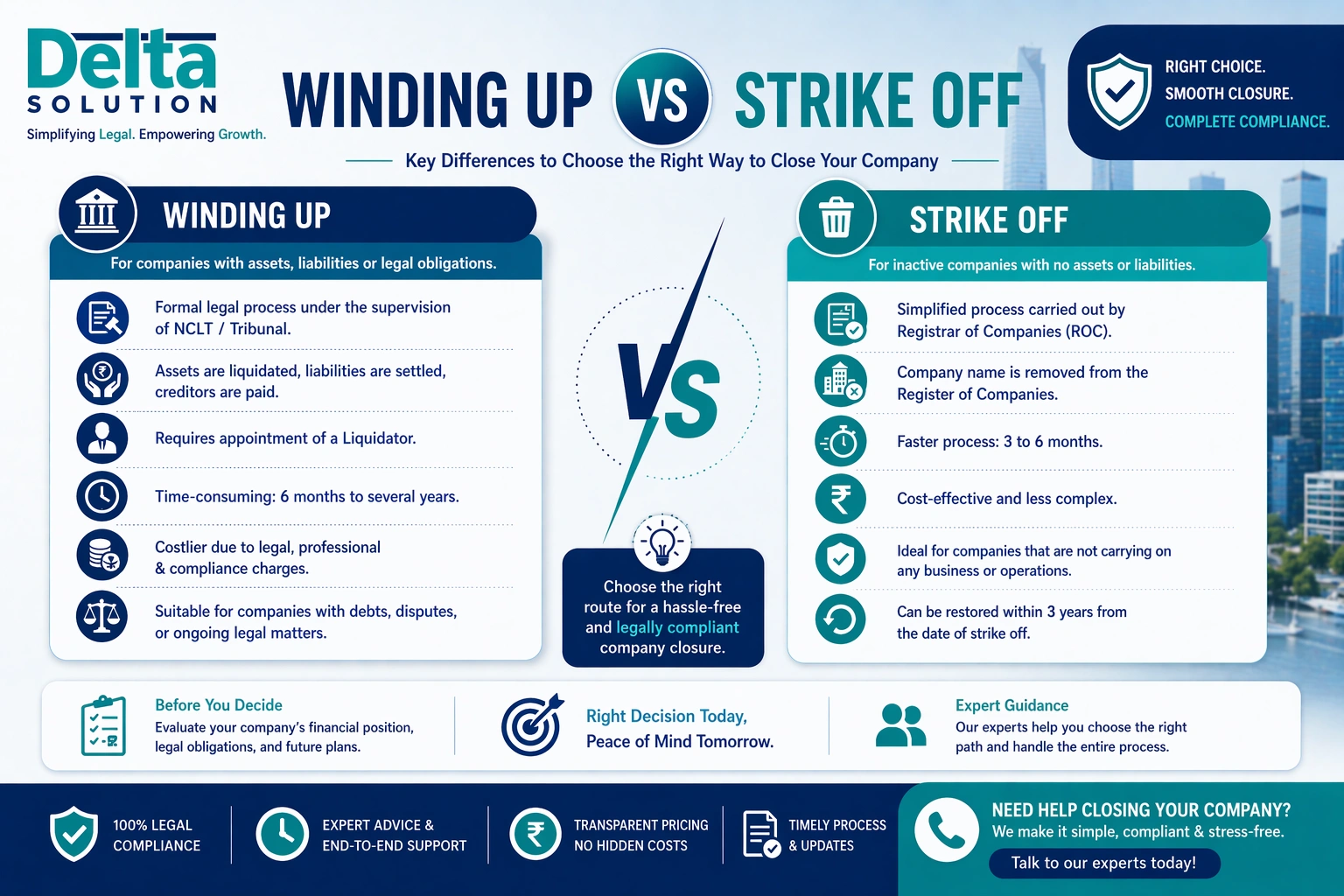
Winding Up vs Strike Off: Key Differences Explained
Planning to close your company? Choosing between Winding Up and Strike Off is a crucial decision.
Both methods lead to closure, but they differ in process, cost, and legal implications.
Selecting the right closure method ensures a smooth exit and avoids future legal complications.
What is Strike Off?
Strike off is a simple method of closing a company by removing its name from the Registrar of Companies (ROC).
- Suitable for inactive companies
- No assets or liabilities
- Quick and cost-effective
What is Winding Up?
Winding up is a formal legal process where company assets are liquidated, liabilities are settled, and the company is dissolved.
- Includes settlement of debts
- Involves legal procedures
- Requires a liquidator
Key Differences
| Aspect | Strike Off | Winding Up |
|---|---|---|
| Purpose | Close inactive company | Close company with liabilities |
| Authority | ROC | Tribunal / NCLT |
| Complexity | Simple | Complex |
| Cost | Low | High |
| Time | 3–6 months | 6 months to years |
| Liabilities | Not allowed | Must be settled |
| Liquidator | Not required | Required |
Key Differences Explained
Applicability: Strike off is for inactive companies, while winding up is for active companies with liabilities.
Financial Status: Strike off requires no liabilities, whereas winding up involves settling debts and assets.
Legal Process: Strike off is a simple ROC procedure, while winding up involves legal proceedings.
Time & Cost: Strike off is faster and cheaper, while winding up takes longer and costs more.
When to Choose Strike Off?
- Company is inactive
- No liabilities
- No legal issues
- Need quick closure
When to Choose Winding Up?
- Company has debts or liabilities
- Legal disputes exist
- Assets need distribution
- Company is insolvent
Advantages of Strike Off
- Simple process
- Low cost
- Quick closure
Advantages of Winding Up
- Legal closure
- Proper liability settlement
- Transparent process
Common Mistakes to Avoid
- Applying strike off with liabilities
- Ignoring legal compliance
- Choosing wrong method
- Incomplete documentation
Pro Tips
- Check financial status before deciding
- Clear dues before strike off
- Maintain records
- Consult experts
Final Thoughts
Winding up and strike off serve different purposes in company closure.
Strike off is simple and cost-effective, while winding up ensures legal settlement of all obligations.
Choose the right method based on your company’s situation for a smooth and compliant closure.